
We photograph our children, parents, grandparents, birthdays, houses, holidays and ordinary moments of life. At the time, we rarely think of these photographs as historical documents.
But time changes their meaning.
A photograph made today may, fifty or a hundred years from now, be one of the few remaining witnesses to a person, a family, a place or an entire way of life.
For generations, families kept photo albums. They were imperfect objects. Photographs came loose, pages yellowed, and someone occasionally wrote a name or date underneath an image.
But the album survived.
You could take it from a shelf, place it on a table and turn the pages with your children or grandchildren. Someone would point to a face and say, “That was your great-grandmother.”
Suddenly, someone who had disappeared decades earlier existed again.
Today we probably make more photographs than any generation in history, yet I wonder whether we are actually preserving fewer memories.
Thousands of photographs accumulate on phones, computers and cloud accounts. A phone is replaced, a password forgotten, a hard drive fails, or nobody knows where the photographs were stored.
Even when the files survive, there is another problem:
Who are these people?
A photograph without information gradually becomes anonymous.
This is why I believe important family photographs should still exist on paper.
Not thousands of them. Edit. Select. Print what matters.
Choose the photographs that tell the story of your family—not only weddings, birthdays and holidays, but ordinary life: the kitchen, the garden, the family home, a grandfather in his favorite chair, children playing, the dog asleep by the fireplace.
These apparently insignificant photographs may one day become the most precious.
A photograph needs a caption.
Write down the full names of the people, where the photograph was made, the date, who took it and, when there is a story behind the image, write that down too.
Don't assume future generations will know.
They won't.
And ask questions while you still can.
Sit with the oldest members of your family and go through the albums. Ask:
Who is this? Where was this? What happened that day? Who lived in that house?
Record the answers.
Once the person who remembers the story is gone, that information may be impossible to recover.
This is not an argument against digital photography. Digital files allow us to duplicate photographs and protect family archives in ways previous generations could never have imagined.
Keep digital copies. Back them up. Scan important old photographs.
But for the photographs that define your family, make a print.
Keep those prints in good archival albums or boxes, away from damp basements, hot attics, damaging adhesives and old self-stick “magnetic” albums. Institutions such as the Library of Congress and the U.S. National Archives recommend this kind of basic care for family photographic collections.
Most importantly, keep the information with the photograph.
During my life as a photographer, I have learned that the meanings of photographs are more than the creators could have anticipated.
The same is true of family photography.
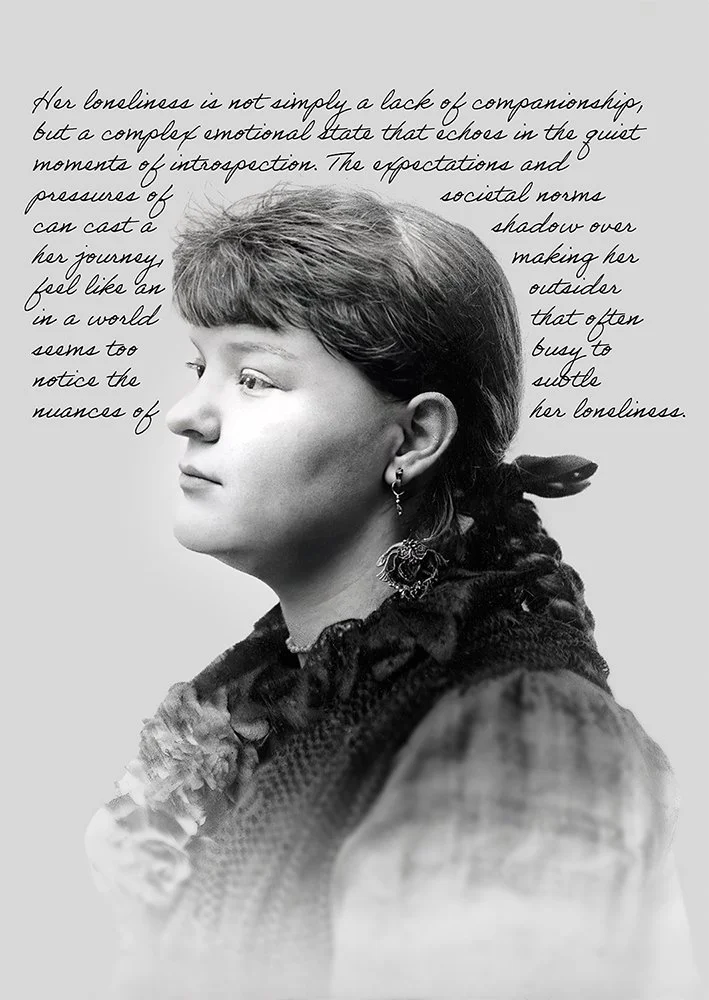
A portrait made simply because someone looked beautiful that afternoon may eventually become the photograph by which her descendants know her.
A snapshot of a house may become the only surviving record of where a family once lived.
We cannot preserve everything, nor should we try.
But we can choose what matters.
Print it. Give the people their names. Write down their stories.
Because a family photograph is not simply a picture of the past.
It is a message to the future.
Family Photography — What Will Remain of Us?
Next
Next