
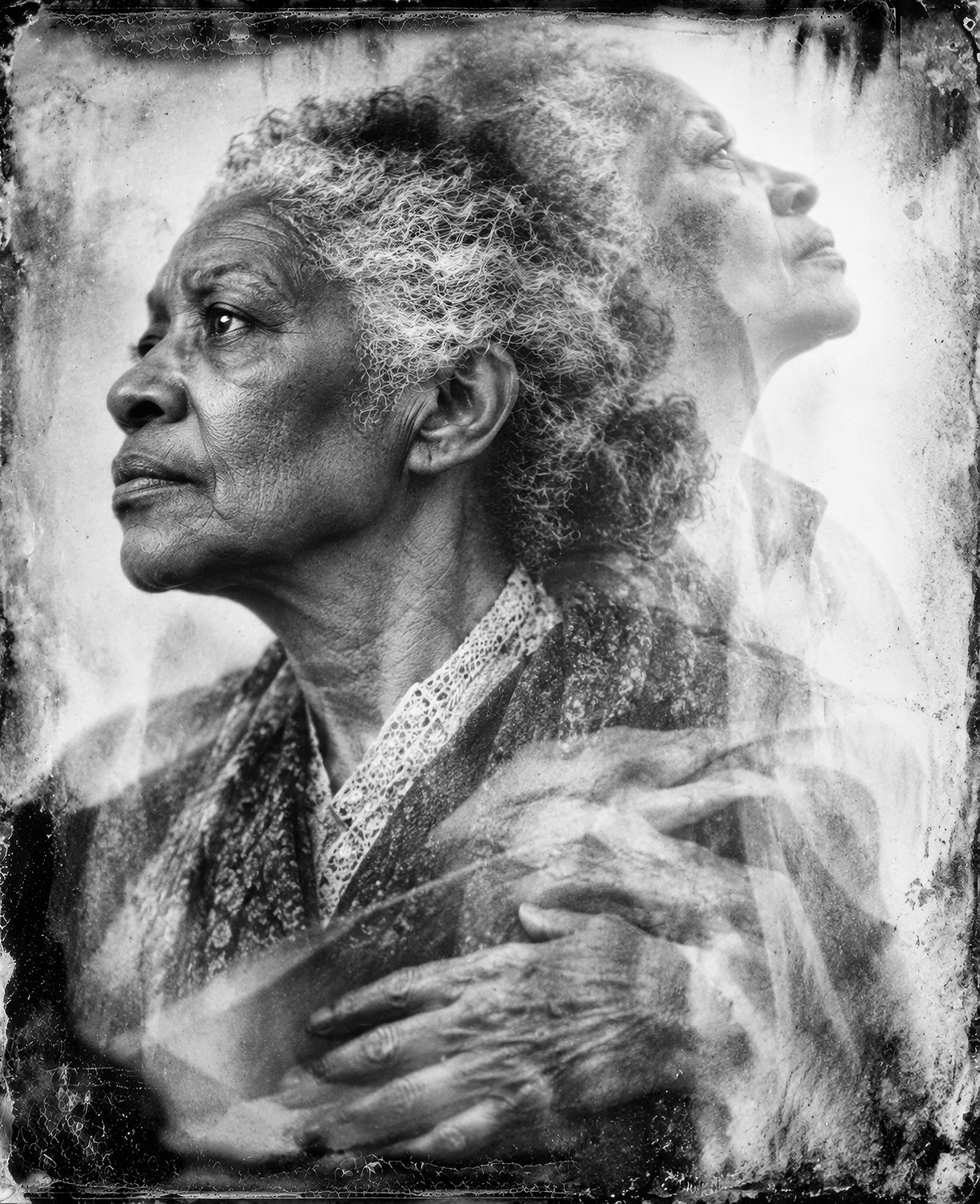
From the series Violence Against Women — Pierre Toutain-Dorbec
What do we see when we look at a face? An expression, an age, perhaps something that reminds us of someone we know. What we cannot see is the whole life behind it. We do not know what happened before that moment, what is being endured, or what remains unspoken.
In the United States, October is Domestic Violence Awareness Month. It is a time to remember those who have lost their lives, listen to survivors, and give attention to people whose safety may depend on being heard. It is also an occasion to consider our own willingness to recognize abuse when it enters lives close to us. [1]
My recent images addressing violence against women belong to that reflection. Through the human face, I want to invite a longer look: enough time to recognize a person, rather than pass over a subject we find difficult.
Beyond what is visible
Domestic violence is not always visible on the body. Abuse can involve intimidation, humiliation, isolation, sexual coercion, or control over money and everyday decisions. Understanding it means looking beyond an isolated incident to patterns of power and control. [2]
This makes the subject particularly difficult to represent. A face cannot prove what someone has experienced. An expression cannot tell us whether a person is safe. Even a powerful image leaves much outside its frame.
The works in this series bring together my original photographs, some developed further with generative AI, and AI-generated images. They are artistic interpretations of violence against women, vulnerability, and human dignity. Their inclusion here does not imply that the people portrayed are survivors of domestic violence, or that the images document actual incidents of abuse.
A person beyond the image
In approaching this series, I am concerned with dignity. Representing violence carries a responsibility toward the people whose experiences give the subject its gravity. Suffering should never become a visual effect that we admire and then forget.
These faces invite us to think about lives that extend beyond what an image can show: relationships, work, memories, wishes, and the right to make choices without fear. No woman should be reduced to what has been done to her. Nor should she have to appear strong or resilient to deserve our care.
The presence of older women in this work is deliberate. Their faces deserve attention in a conversation too often shaped by a narrow picture of who a survivor might be. Women of different ages and backgrounds must be able to recognize that their safety and dignity matter.
Domestic abuse can affect people of any gender. The focus of this series is violence against women; that focus sits within a wider concern for everyone living with abuse.
The responsibility of looking
I do not believe an image can explain another person's life for them. It can, however, interrupt our indifference. It can leave us with a question that follows us after we turn away.
For me, the question is what attention asks of us. Looking at these images should lead beyond the images themselves: toward listening, learning, and supporting the people and organizations working alongside survivors.
October gives this reflection a place on the calendar. The responsibility continues throughout the year. Every woman has the right to safety, freedom, and a life in which her dignity is respected.
Support and information
In the United States, contact the National Domestic Violence Hotline at 800-799-7233, text START to 88788, or visit TheHotline.org.